Why We Built a Marketing Division
Tireweb CEO Matthew Walker on the two problems that kept showing up in dealer conversations, and why the answer was building marketing into the platform instead of pointing dealers to another agency.
For years, the most common question our support team fielded had nothing to do with our software. It was some version of: "Can you guys just handle my marketing too?"
For years, we said no. We built websites, e-commerce and tire data. Marketing was somebody else's job. We'd politely suggest finding a good local agency, and the dealer would sigh, because they'd usually already tried that.
We finally stopped saying no. Here's why.
The agency problem never got better
I've watched hundreds of dealers cycle through marketing agencies, and the pattern barely changes. The agency is smart and well-meaning. It also serves a dentist, a roofer, two restaurants and a med spa, and it has no idea what a load rating is, when winter changeover season starts, or why a co-op program matters. The dealer spends the first six months educating the agency about the tire business. Then the account manager changes, and they start over.
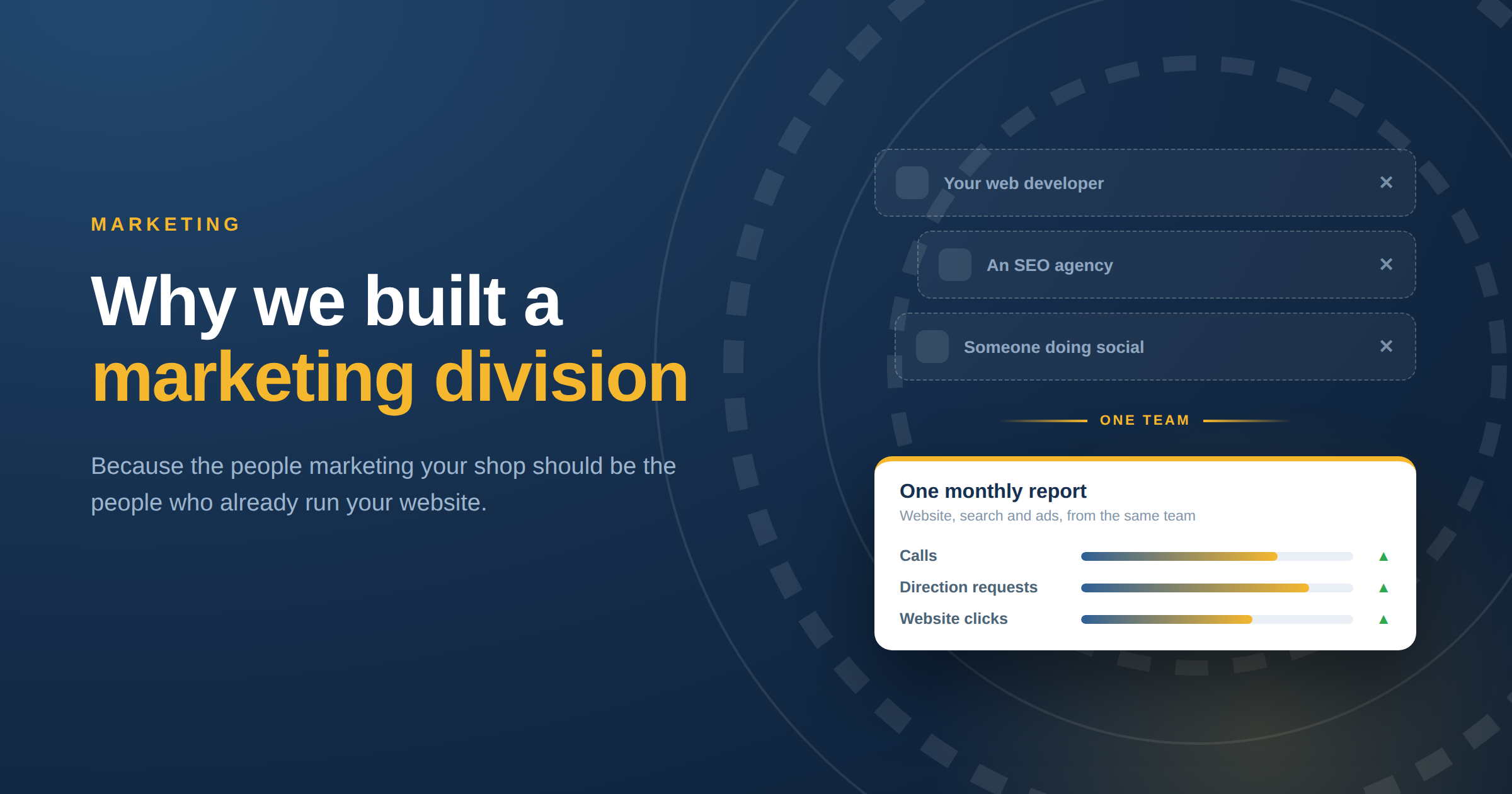
Meanwhile, the practical work suffered from a structural gap: the agency could recommend changes to the dealer's website but couldn't make them. Every landing page, every page title, every tracking fix went into a ticket queue for a developer somewhere. We watched simple requests take weeks. We were often the developer in that queue, implementing another company's recommendations on a site we built, thinking: this should be one job.
Then search started changing under everyone's feet
The second reason is newer. Customers are shifting from typing searches and clicking links to asking AI assistants direct questions, and assistants answer with one or two shop names, not ten options. The signals that get a shop named, structured data, consistent listings, review content, machine-readable websites, are not in the standard agency playbook. Most agencies aren't checking whether ChatGPT knows their clients exist. Most dealers have never thought to ask.
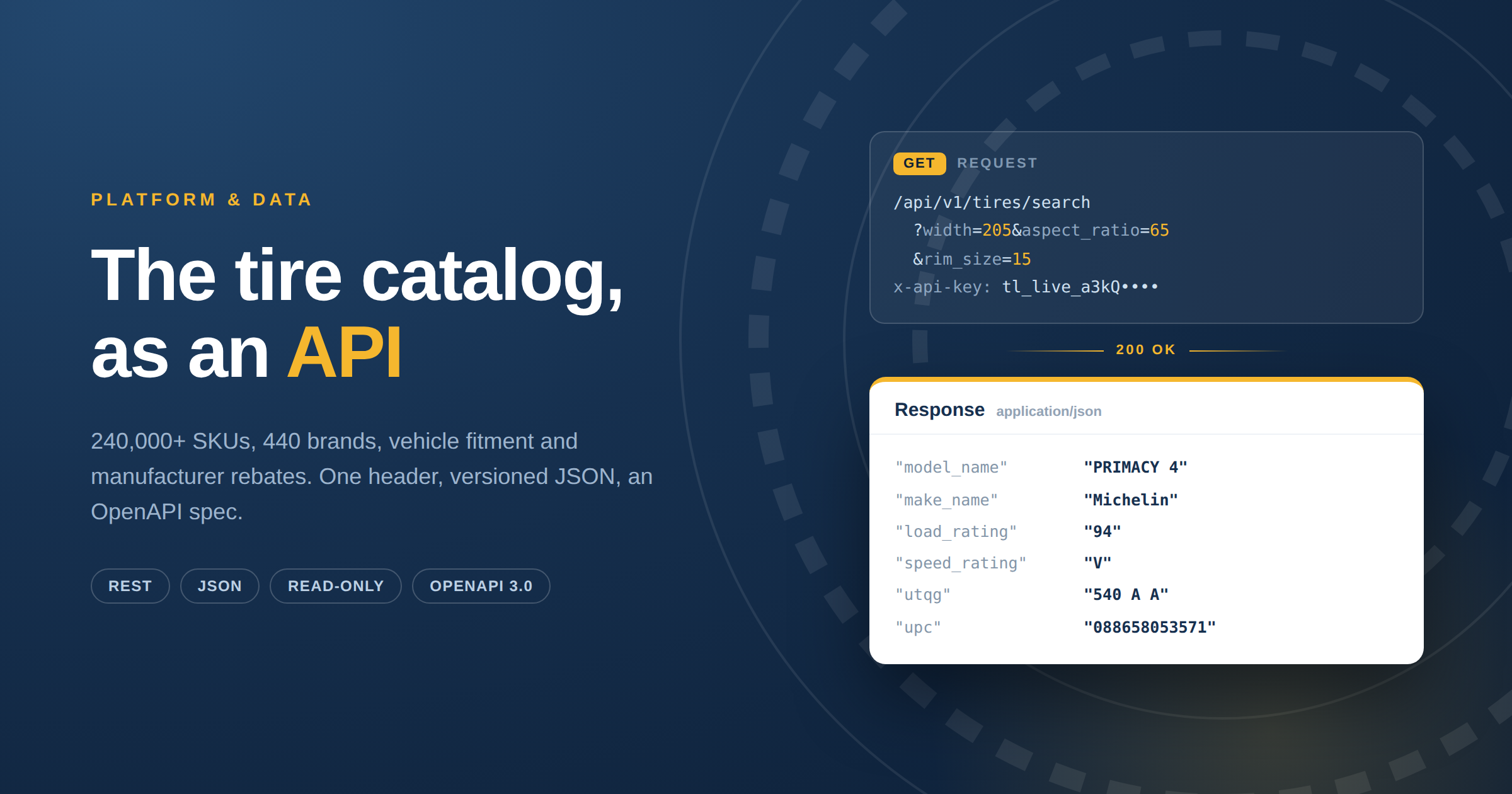
We've spent two decades making tire data machine-readable. Our Tirelibrary database normalizes specs on more than 240,000 SKUs precisely so software can answer tire questions correctly. Preparing a dealer's business data so AI systems can read it is, frankly, the most Tireweb-shaped problem imaginable. It would have been strange for us not to do it.
What we decided it had to be
When we committed to building Tireweb Marketing, we set three rules.
First, it had to know tires. Content planned around the industry's real buying seasons, campaigns written by people who understand the products.
Second, it had to be accountable. One monthly report, connected to the systems that take your orders and book your appointments, showing calls, quotes and appointments. If marketing spend can't be traced to customer actions, we don't think you should pay for it.
Third, it had to be honest about time. Local SEO takes four to six months to move measurably. Anyone who promises faster is selling you the first month of a disappointment.
The part I'll admit
This is also a business decision, and I won't pretend otherwise. Dealers were paying agencies that couldn't serve them well, and we watched that money produce mediocre results on websites we maintain. We think we can do materially better, and we're structured so you can hold us to it month by month.
If your marketing is working, keep it. Truly. But if you've cycled through agencies, or if you've never asked whether an AI assistant would mention your shop, take a look at what we built. The team that runs your website is ready to run the rest.

Matthew Walker
Chief Executive Officer, Tireweb
Matthew Walker is the CEO of Tireweb, where he works with tire businesses around the world to help them operate more efficiently and serve customers better through technology. Having spent much of his career at the intersection of tires, automotive retail, and software, Matthew enjoys exploring new ideas, industry trends, and practical ways businesses can embrace change. His articles focus on the real-world challenges facing the tire industry and the opportunities technology creates for future growth.