AI Search Readiness Explained: How Tire Shops Show Up in ChatGPT Answers
Customers are asking AI assistants where to buy tires, and the assistants answer with one or two shop names. Here is what decides whose name comes back, and how AI Search Readiness works.
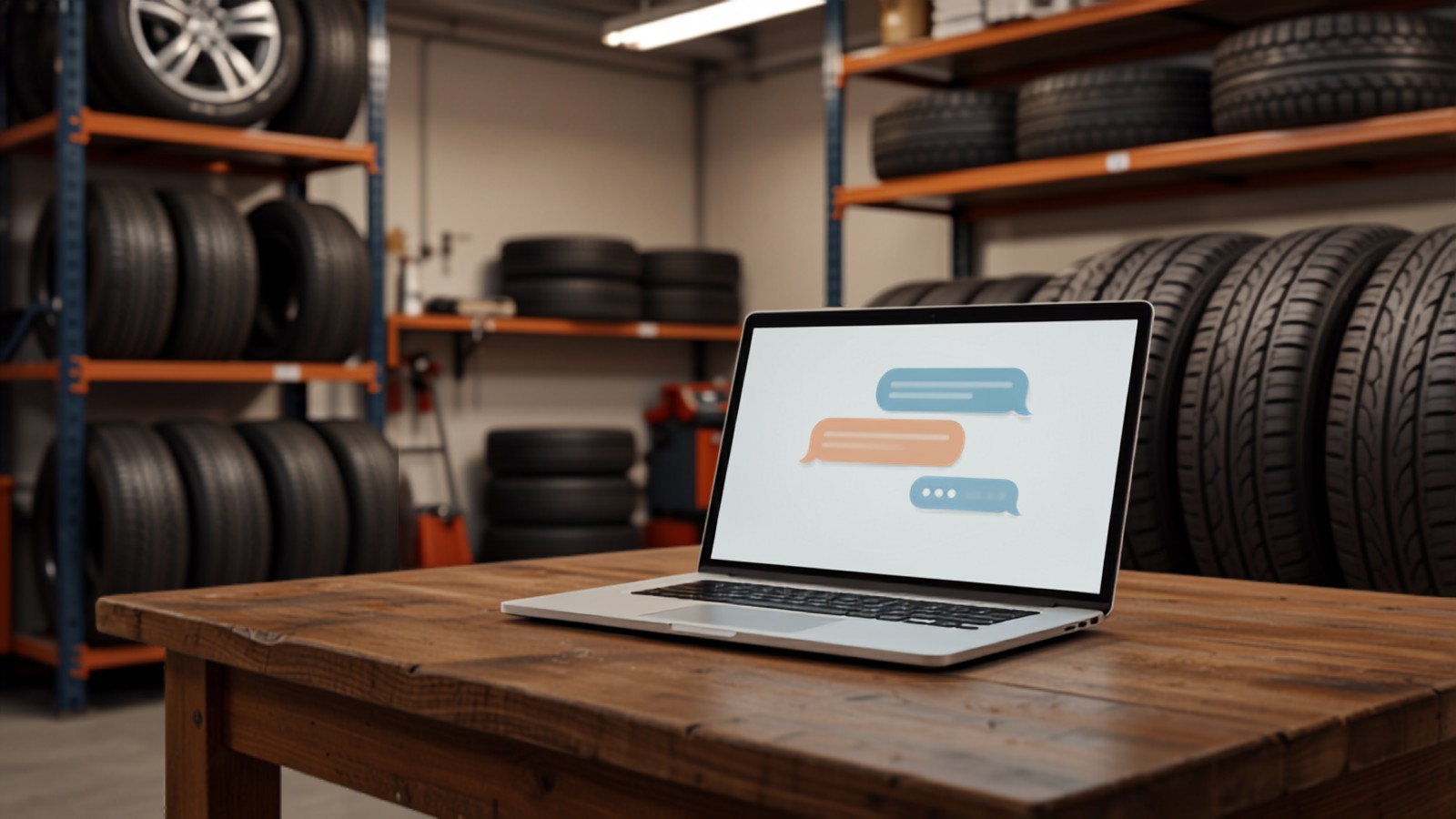
A growing share of tire customers no longer search. They ask. "Where should I buy tires near me?" typed into ChatGPT, spoken to an assistant, or answered by the AI Overview at the top of Google before any traditional result appears. The assistant doesn't return ten links to compare. It names a shop or two.
That change creates a new marketing question with no page-two consolation prize: is your shop in the answer? AI Search Readiness is the work of making sure it can be. Here's what it actually consists of, in plain language.
How assistants pick a shop
When someone asks an AI assistant a local tire question, the assistant typically runs a live web search behind the scenes, reads what it finds, and composes an answer from the sources it can parse and trust. Which means it draws on your Google Business Profile, your directory listings, your reviews, and your website, exactly the raw material of local SEO, filtered through one hard requirement: the machine has to be able to read it.
That requirement is where most tire shops fall down. A homepage that's a photo slider, service info trapped in graphics, pricing that exists only as "call us": to a human these are inconveniences, to a machine they're blank pages.
Schema markup: declaring what you are
Schema markup is a standardized vocabulary, invisible to visitors, embedded in your site's code, that declares facts in the format machines natively consume: this is a tire shop; here are its locations, hours, phone numbers, services and review ratings. With schema, an AI system doesn't have to infer what you are from prose. You've told it, unambiguously, per location. It's the single most concrete piece of AI readiness, and it's also well-established: search engines have rewarded structured data for years, so the same work serves both audiences.
llms.txt: the machine's orientation sheet
llms.txt is a newer convention: a plain-text file at yourdomain.com/llms.txt that gives AI crawlers a clean, curated summary of your business: locations, services, brands carried, links to inventory and booking. Think of it as the one-page orientation sheet you'd hand a new counter hire, written for language models.
An honest note, because this space attracts overselling: llms.txt is an emerging standard, and adoption among AI companies is still uneven. Nobody can promise it puts you in next week's ChatGPT answer. It costs almost nothing, points the right direction, and forces a useful discipline: writing down the ground truth of your business in one place. We include it because the cost-benefit is obvious, not because it's magic.
Search engine verification, including the one you forgot
ChatGPT's live search draws heavily on Bing's index. Most tire shops have never once looked at Bing Webmaster Tools. Verifying your site with the search engines that feed AI systems, and confirming your pages are indexed there, is unglamorous plumbing that determines whether assistants can find you at all.
Reviews: the words are the data
AI assistants read review text, not just star averages. In practice, the sentences your customers write become the description machines give of your shop: "honest pricing," "fast turnaround," "they matched the online price." Volume and recency keep that picture current. This is the same review discipline local SEO always rewarded, with higher stakes: the reviews aren't just persuading the next customer who reads them, they're scripting what the AI says about you.
What this looks like as a service
AI Search Readiness is included in every Tireweb Marketing package, not sold as an upgrade: schema markup deployed and maintained per location, llms.txt created and kept current, Bing Webmaster Tools verification, and the listing, review and website hygiene that feeds machine answers, handled by the same team that runs your Tireweb website, so changes ship same-day.
If you want a sense of where you stand today, try it yourself: ask ChatGPT where to buy tires in your town, and see whose name comes back. If it isn't yours, that's fixable, and the shops fixing it first are being written into answers their competitors don't know are being given.