Local SEO for Tire Shops: The Complete Guide
Most tire purchases start with a local search. This guide covers everything that determines whether your shop shows up: Google Business Profile, listings, reviews, your website, and the new AI answer layer.
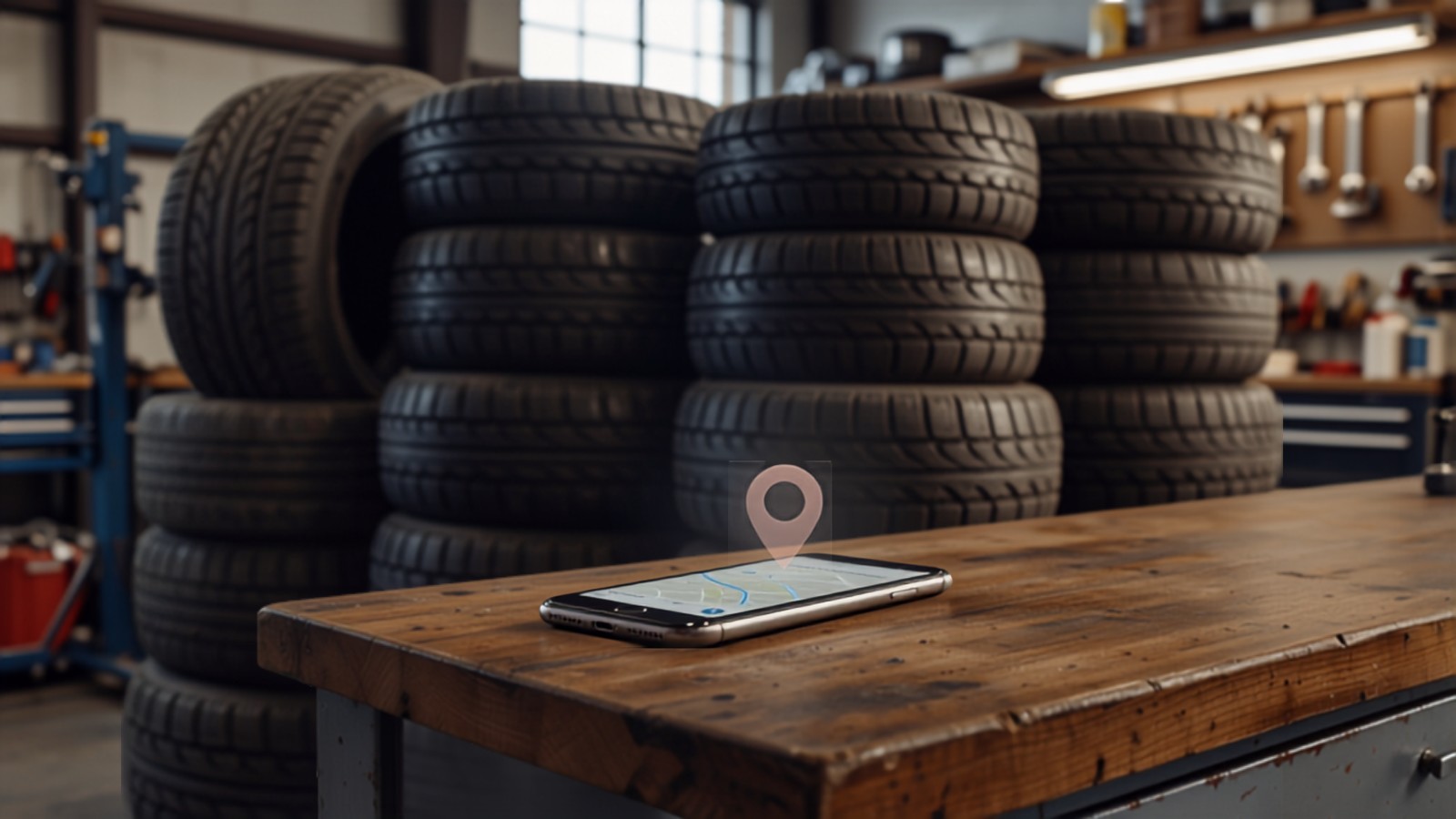
Most sets of tires are sold to someone who, hours or days earlier, searched some version of "tire shop near me." Local SEO is the work of making sure your shop is what they find. This guide covers what actually matters, in order of impact.
Start with your Google Business Profile
Your Google Business Profile (GBP) is the most-read document about your business, and for many customers it IS your business: the map pin, the hours, the reviews, the phone number they tap. It outranks your website in visibility for nearly every local search.
What a fully worked GBP looks like for a tire shop: correct primary category (Tire Shop) with secondary categories for your services; complete services list, including the ones customers search for by name, like alignments and TPMS; accurate hours, updated for holidays; real photos of the shop, bays and team, refreshed regularly; and posts a few times a month for promotions and seasonal reminders. Shops that treat GBP as a set-and-forget listing consistently lose map-pack placement to shops that work it.
Make every listing agree
Google cross-checks your name, address and phone number (NAP) across the web: Yelp, Facebook, Apple Maps, Bing, YellowPages and dozens of data aggregators. Every mismatch, an old address, a dead tracking number from a past agency, a "Tire and Auto" here versus "Tire & Auto" there, reads as uncertainty, and uncertainty costs ranking. A directory cleanup is unglamorous work with outsized returns, and it only has to be done thoroughly once, then maintained.
Reviews: volume, recency, words, responses
Reviews influence local ranking three ways. Volume and recency signal a business that's alive and busy. Star average matters, but less than most owners think once you're above the low fours. And the text matters more every year: search systems (and now AI assistants) read what customers wrote, so "fast, honest, matched the online price" in twenty reviews becomes part of how machines describe you.
The playbook: ask every satisfied customer at pickup, make it a counter habit, and respond to every review with substance. "Glad we could get your alignment done while you waited" confirms a service you offer, in public, permanently. "Thanks!" confirms nothing.
Your website still does the heavy lifting
The map pack gets the click, but your site earns the rankings underneath it: a page per location with embedded map, hours and unique content; a page per major service, so "wheel alignment [your town]" has somewhere to land; page titles and headings that say plainly what you do and where; fast load times, since slow tire sites measurably lose customers; and inventory customers can actually browse. Keyword targets should span the whole buying journey, from research ("how long do tires last") to ready-to-buy ("225/65R17 in stock near me").
The new layer: AI search readiness
Local SEO now has a second audience: AI systems. Google's AI Overviews, ChatGPT and Perplexity increasingly answer "where should I buy tires" questions directly, naming one or two shops. Those answers get assembled from the same raw material as classic local SEO, plus a technical layer most shops don't have: schema markup that declares your business type, locations and hours in machine-native format, and an llms.txt file that gives AI crawlers a clean summary of your business. We wrote a full explainer on this in AI Search Readiness Explained. The short version: the work you do for Google now feeds the machines that answer customers directly, if your site is structured so they can read it.
The honest timeline
Local SEO compounds, and it starts slow. Expect four to six months before measurable movement in rankings and calls, faster if your foundation is decent, slower in brutally competitive metros. Anyone promising page one in thirty days is describing an ad buy or a fiction.
Doing it yourself vs. having it done
Everything above is doable in-house if someone owns it every week: GBP posting, review responses, listing maintenance, content. The failure mode isn't ability, it's consistency; it's nobody's job, so it's nobody's job. If you'd rather have it handled by people who already know the tire business, that's exactly what Tireweb Marketing does, from GBP management through AI search readiness, with one monthly report showing calls, rankings and reviews. Either way, the shops that win local search in your town will be the ones that treat it as an operating discipline, not a one-time project.